Switch To Wishbone Helped Establish Defensive Dominance Under McCartney
September 05, 2026 | Football
NOTE: After last week's story about CU's new Go-Go offense and how it helps the defense prepare, Iron Sharpens Iron, CU historian David Plati recalled similarities with the 1985 Buffaloes, who, after switching to the Wishbone offense, the defense improved dramatically, being the backbone of the next decade of dominance. In CU's season opener, the results thus far are solid, as the Buffs held Georgia Tech to just 51 yards rushing and 288 yards of total offense yielding just two field goals.
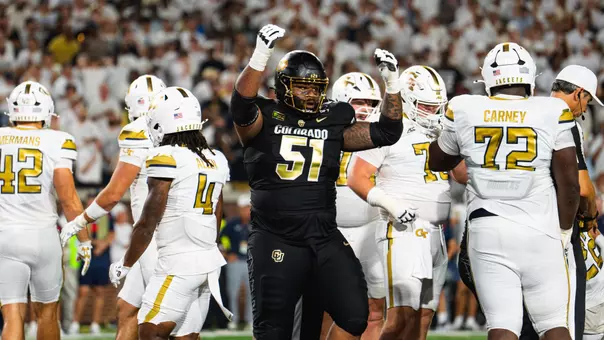
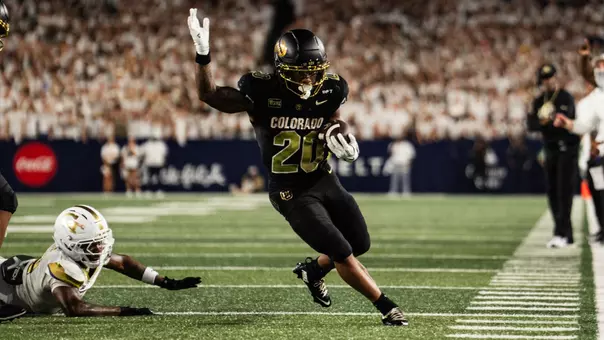
BOULDER –The last time a new offense made Colorado's defense dramatically better, it launched a decade of dominance. Four decades later, with Brennan Marion's Go-Go offense giving the Buffs' defense its daily test in camp, the early return looks familiar: Georgia Tech managed just 51 rushing yards and 288 total in the opener.
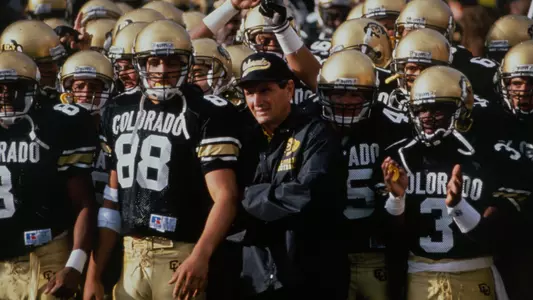
Back in 1985, CU hosted the NCAA West Regional in Denver, which ended on Sunday, March 24. The next day, with several national media still in town, head coach Bill McCartney wanted to make splash and held a press conference at the media hotel to announce CU's new offense, publicly introduce four new assistant coaches and that the football team would once again don black jerseys after wearing blue the previous four seasons.
The Buffs were switching from a pro-style pass oriented attack to the wishbone option offense. Obviously it had great success for years at Oklahoma, but McCartney cited how it had worked for the service academies.
The move was greeted with some skepticism; a Denver Post reporter penned a column that, "The wishbone was no miracle cure." CU had gone 1-10 in 1984, finishing last in the nation in rushing offense (105th, 59.9 yards per game) and 87th in total offense (293.6). Things were just as bad on defense, as CU was 102nd against the run the previous two seasons (257.1 in '84) and 88th in total defense (395.2).
Spring practices were a week away and the newly installed offense was up against the defense from the get-go. There no players on offense even remotely familiar with the wishbone, especially the quarterbacks. Initially, fumbles were aplenty. And the defense returned only five starters – two of whom were part-time – and had a brand new starting secondary. Slowly but surely, it adapted to defending the run for the school's best effort in 16 seasons and improving overall in 18 (or since 1967).
The new offense looked good in the spring game, with 334 rushing yards, but at that point in time the opponent was still the Alumni, which took a 24-0 beating. The first real test came four months later in the season opener game against Colorado State.
The offense did not disappoint. In the 23-10 win over the Rams, the Buffs ran the ball 73 times for 358 yards, the first of five times CU's backs amassing over 300 yards on the ground. Ditto the next week in a 21-17 win over Oregon (58 attempts for 342). Meanwhile, the defense had clamped down, holding six opponents to under 300 yards, four under 100 rushing and nine under 200 passing.
The final season numbers more or less flip-flopped on offense, from last to ninth in rushing (259.8) and from 16th to last passing and eight spots higher in total yards (79th, 302.3).
But on defense, the unit went from 88th to 17th in the country, allowing almost 100 fewer yards per game (296.8), while the defense against the run jumped from 102nd to 37th (153.5).
An improvement in time of possession also factored in, averaging just under 32 minutes per game, over three-and-a-half more than the season earlier.
And where it counted the most, a defense that was 101st nationally in '84, allowing 33.1 points per game saw opponents average just 14 (also a low since '67), finishing 15th in the NCAA. Nine opponents were held to 17 points or less, four in single digits with one shutout.
In the end, CU was the most improved team in the country with a 7-5 record and its first bowl berth since 1976. So much for the wishbone not being a miracle cure.
Rushing offenses were more prevalent 40 years ago; today with the run-pass option (RPO) oriented schemes, shoring up defenses against those could very well pay dividends for the '26 Buffaloes.
BOULDER –The last time a new offense made Colorado's defense dramatically better, it launched a decade of dominance. Four decades later, with Brennan Marion's Go-Go offense giving the Buffs' defense its daily test in camp, the early return looks familiar: Georgia Tech managed just 51 rushing yards and 288 total in the opener.
Back in 1985, CU hosted the NCAA West Regional in Denver, which ended on Sunday, March 24. The next day, with several national media still in town, head coach Bill McCartney wanted to make splash and held a press conference at the media hotel to announce CU's new offense, publicly introduce four new assistant coaches and that the football team would once again don black jerseys after wearing blue the previous four seasons.
The Buffs were switching from a pro-style pass oriented attack to the wishbone option offense. Obviously it had great success for years at Oklahoma, but McCartney cited how it had worked for the service academies.
The move was greeted with some skepticism; a Denver Post reporter penned a column that, "The wishbone was no miracle cure." CU had gone 1-10 in 1984, finishing last in the nation in rushing offense (105th, 59.9 yards per game) and 87th in total offense (293.6). Things were just as bad on defense, as CU was 102nd against the run the previous two seasons (257.1 in '84) and 88th in total defense (395.2).
Spring practices were a week away and the newly installed offense was up against the defense from the get-go. There no players on offense even remotely familiar with the wishbone, especially the quarterbacks. Initially, fumbles were aplenty. And the defense returned only five starters – two of whom were part-time – and had a brand new starting secondary. Slowly but surely, it adapted to defending the run for the school's best effort in 16 seasons and improving overall in 18 (or since 1967).
The new offense looked good in the spring game, with 334 rushing yards, but at that point in time the opponent was still the Alumni, which took a 24-0 beating. The first real test came four months later in the season opener game against Colorado State.
The offense did not disappoint. In the 23-10 win over the Rams, the Buffs ran the ball 73 times for 358 yards, the first of five times CU's backs amassing over 300 yards on the ground. Ditto the next week in a 21-17 win over Oregon (58 attempts for 342). Meanwhile, the defense had clamped down, holding six opponents to under 300 yards, four under 100 rushing and nine under 200 passing.
The final season numbers more or less flip-flopped on offense, from last to ninth in rushing (259.8) and from 16th to last passing and eight spots higher in total yards (79th, 302.3).
But on defense, the unit went from 88th to 17th in the country, allowing almost 100 fewer yards per game (296.8), while the defense against the run jumped from 102nd to 37th (153.5).
An improvement in time of possession also factored in, averaging just under 32 minutes per game, over three-and-a-half more than the season earlier.
And where it counted the most, a defense that was 101st nationally in '84, allowing 33.1 points per game saw opponents average just 14 (also a low since '67), finishing 15th in the NCAA. Nine opponents were held to 17 points or less, four in single digits with one shutout.
In the end, CU was the most improved team in the country with a 7-5 record and its first bowl berth since 1976. So much for the wishbone not being a miracle cure.
Rushing offenses were more prevalent 40 years ago; today with the run-pass option (RPO) oriented schemes, shoring up defenses against those could very well pay dividends for the '26 Buffaloes.
Saturday, September 05
Friday, September 04
Friday, September 04
Friday, September 04